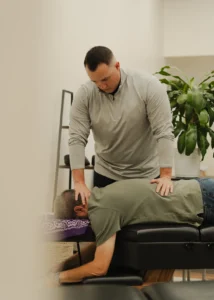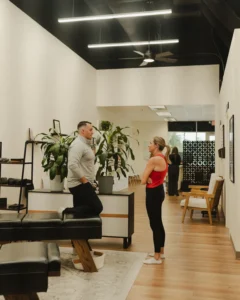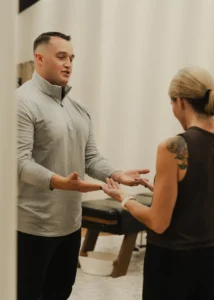
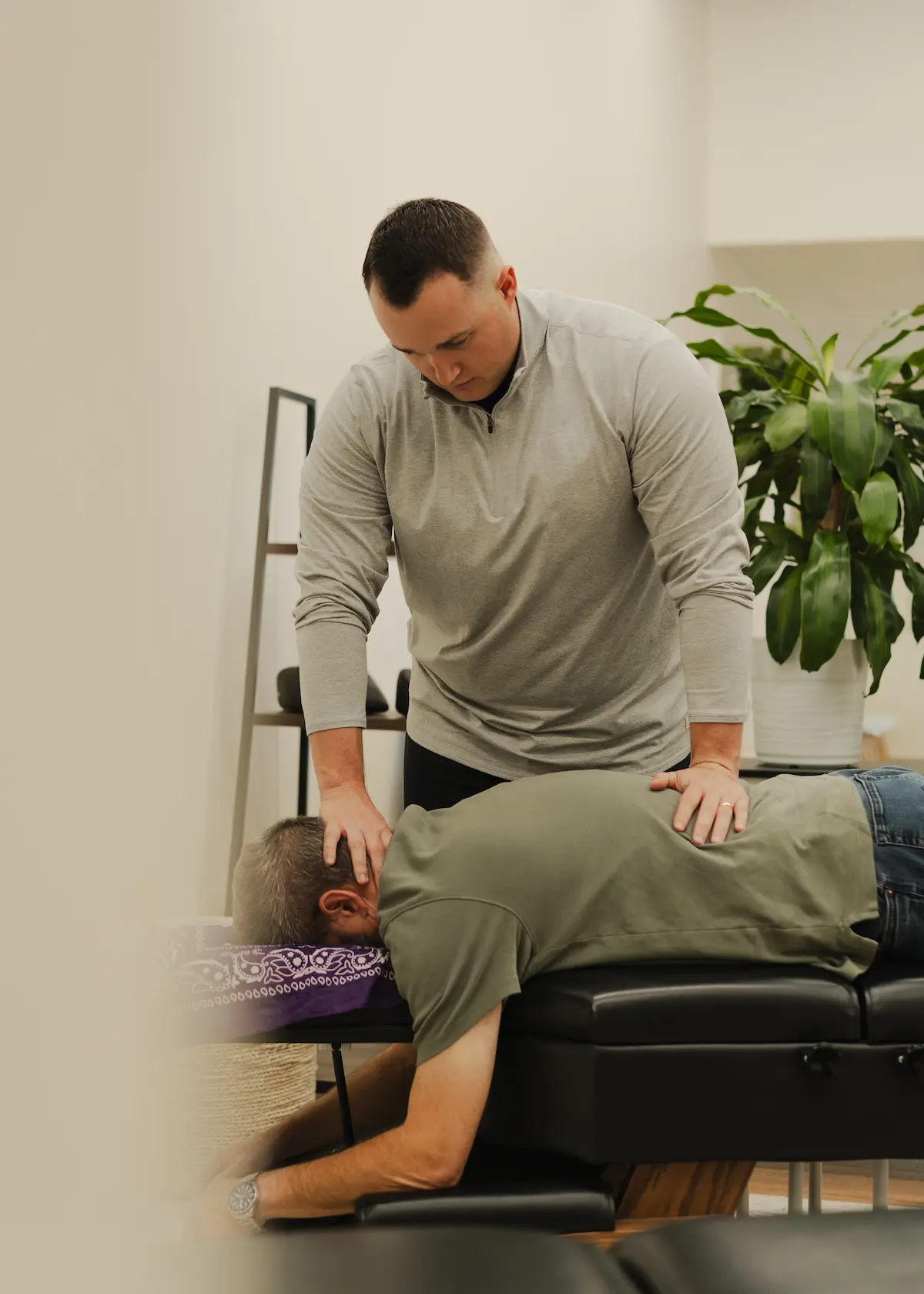
Dr. Zach Thompson treats sports injuries in Colleyville with a perspective most chiropractors don’t have: he’s been the injured athlete himself. Combined with a Bachelor of Science in Exercise Science, his approach looks past “what hurts” into the movement patterns and biomechanics that caused the injury in the first place.
The Injury That Started It All
At 18, Dr. Thompson was a college football player who pushed too hard on a heavy squat. What followed was six months of severe pain, just from walking to class. He was taking eight Advil and two sleeping pills a night just to function. The advice he got was to stretch his hamstrings and wait it out.
It didn’t get better. One night that summer, he sat down on the couch before dinner and couldn’t get back up. He was stuck there until morning.
An emergency visit to an orthopedic surgeon followed, along with MRIs and X-rays. Nothing pointed to surgery. The surgeon gave him two options: a bottle of Vicodin, or the chiropractor down the hall. He chose the chiropractor. Within two weeks, he was back in the gym and the pain was gone.
That’s the moment he decided what he wanted to do with his life. He didn’t want another 18-year-old athlete spending six months suffering through something that, in his case, was straightforward to fix once someone actually addressed it correctly.
Why the Exercise Science Background Matters
Dr. Thompson went on to earn his B.S. in Exercise Science from Salisbury University before completing his Doctor of Chiropractic at Parker University in Dallas. That foundation changes how he looks at every athlete who walks in.
He’s not just asking where it hurts. He’s assessing how the body moves, how load gets distributed across joints, and what the underlying structure is doing that made the injury likely to happen in the first place. That’s a different lens than a standard exam, and it’s especially relevant for sports injury patients whose pain often traces back to movement mechanics, not a single bad moment.
What a Sports Injury Visit Looks Like
Sport-specific intake goes deeper than a standard visit. It includes injury history with sport context (what position, what movement, what load), plus a movement quality assessment alongside the standard orthopedic and neurological testing.
Common injuries treated include:
- Back pain from training load or lifting mechanics
- Neck pain from contact sports or overhead activity
- Shoulder and rotator cuff strain
- Hip and SI joint pain from running, cycling, or lateral movement sports
- Knee pain from impact, overuse, or patellar tracking issues
- Ankle sprains from court, trail, or field sports
- Sciatica triggered or worsened by training
Recovery Isn’t the Whole Story
Regular chiropractic care isn’t only for injuries that already happened. Reducing biomechanical stress on the body can lower the risk of overuse injuries before they start. Some active patients continue maintenance visits between seasons for exactly this reason, not because something is currently wrong.
Parents bringing in young athletes see this play out often. Different kids show up with different issues, from mobility restrictions to lingering discomfort, and the goal is always the same: keep them playing the sport they love instead of sitting out.
Frequently Asked Questions
Can chiropractic care help prevent sports injuries, not just treat them?
Reducing biomechanical stress through regular care may help lower the risk of overuse injuries, which is why some active patients continue maintenance visits between seasons.
Do you treat youth athletes?
Yes. Dr. Thompson works with young athletes dealing with sports-related pain and mobility issues, in addition to adult patients.
What if I’m not sure what’s causing my pain?
That’s exactly what the exam process is for. A sport-specific intake looks at movement patterns and mechanics, not just the area that hurts, to identify the actual source.
Do I need to stop playing my sport during treatment?
It depends on the injury and severity. Many athletes continue training or playing at a modified level while working through a care plan, based on what the exam finds.
If pain is affecting your performance or keeping you out of the game, contact Within Chiropractic or call 682-343-6801 to schedule a sports injury exam in Colleyville.