


Back Pain Relief in Colleyville, TX

Back pain is the most common reason patients visit Within Chiropractic – and one of the most treatable when the actual source is properly identified and addressed.

A woman in a beige tank top sits at a table, holding her lower back and stomach with a pained expression, next to a laptop.

Why Back Pain Keeps Coming Back

The stiffness that sets in after twenty minutes in a chair. The sharp catch when you bend to pick something up. The dull ache that becomes background noise by midday. Most people dealing with back pain have learned to work around it rather than actually resolve it, because what they’ve tried so far has only taken the edge off.

Here’s the thing: back pain is not one thing. It can be muscular, mechanical, disc-related, or nerve-related, and each of those requires a different approach. When treatment is aimed at the wrong source, the pain comes back. That’s not a coincidence. That’s a diagnostic problem.

What Causes Back Pain?

Back pain rarely has a single cause. It usually develops from a combination of structural factors, movement habits, and accumulated stress over time. For active adults in the Colleyville area, the most common contributors include:

When back pain travels into the buttock, down the leg, or causes numbness or tingling in the foot, it often means a nerve is involved. That’s a condition commonly called Sciatica , and it’s worth having its own evaluation alongside the back pain.

How Dr. Thompson Addresses Back Pain in Colleyville

Before any treatment begins, Dr. Thompson identifies the specific source of the back pain through digital X-rays, posture analysis, and a full orthopedic and neurological exam. What he finds determines how care is structured.

Close-up of a person's hands, wearing a gold ring, pressing on the lower back of another person wearing olive green pants and blue jeans.

Chiropractic Adjustments

Lumbar and pelvic adjustments restore normal motion to restricted spinal segments and reduce the nerve irritation and muscle guarding that keep the pain cycle going. Dr. Thompson uses Diversified, Thompson Drop, and Activator techniques depending on what your presentation calls for. For many back pain patients, identifying and correcting pelvic misalignment is as important as treating the lumbar spine directly. Learn more about chiropractic care
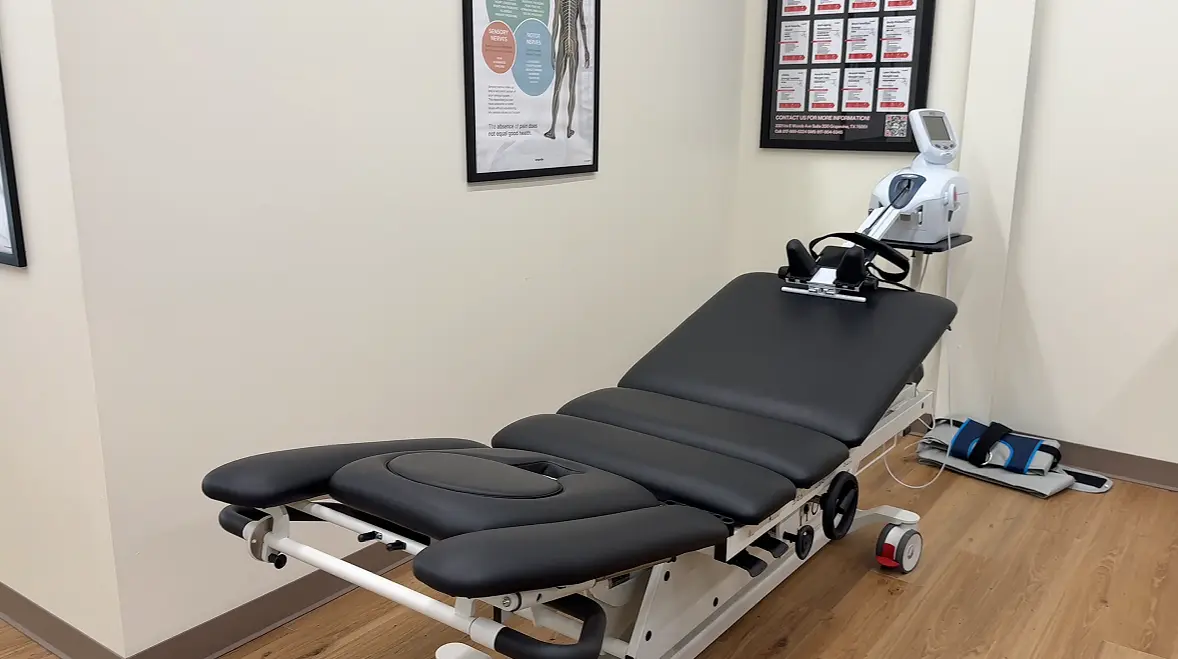
A black medical treatment table with a white and silver therapy device at its head, in a room with light walls and wooden floors.

Spinal Decompression

For back pain driven by disc compression or nerve involvement, spinal decompression creates a gentle traction force that reduces intradiscal pressure, takes load off compressed nerve roots, and gives the disc the environment it needs to heal. If your back pain includes leg symptoms or has been connected to a disc problem on imaging, decompression is likely part of the conversation. Learn more about spinal decompression
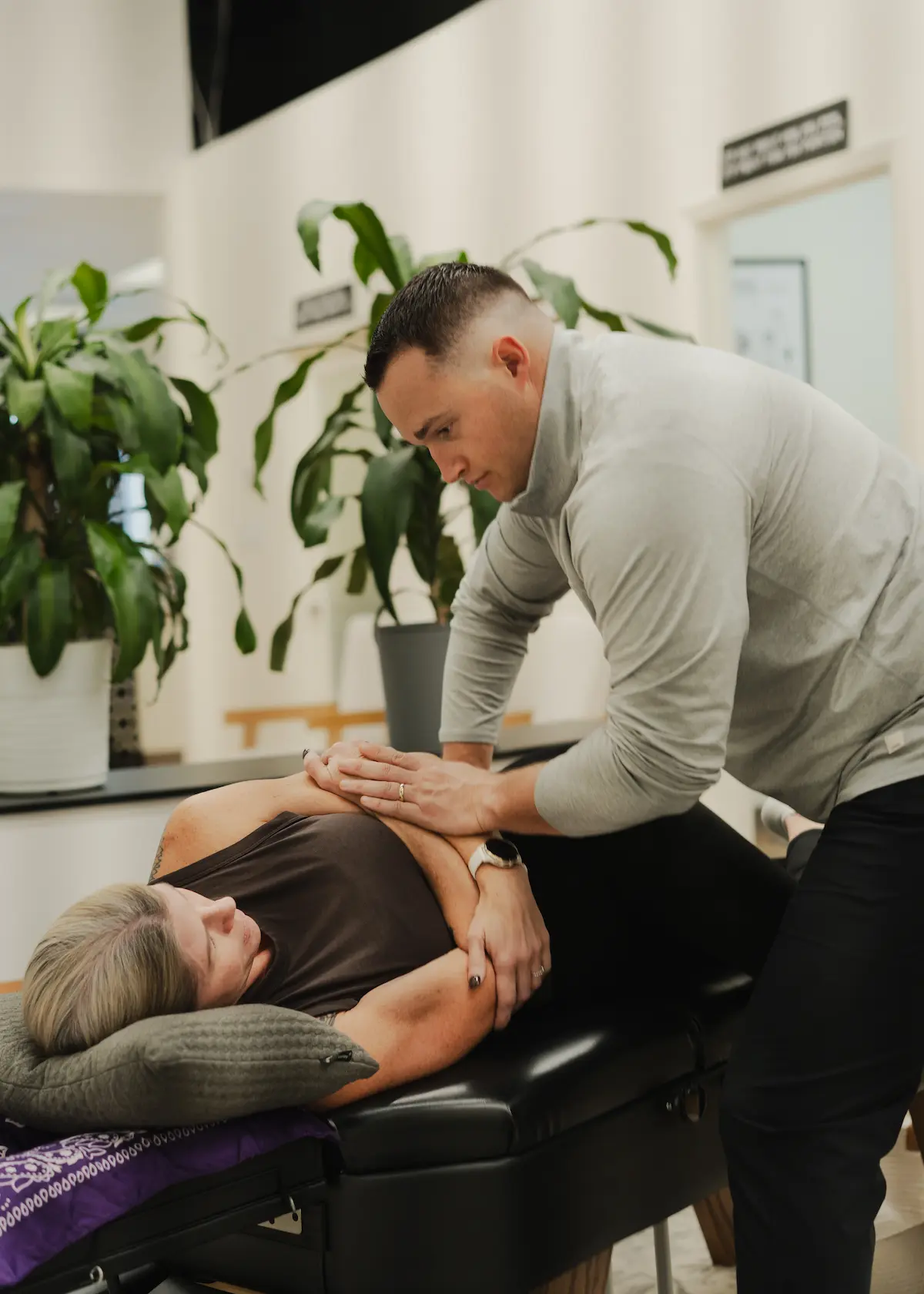

A man in a grey shirt performs an adjustment on a woman lying on a black treatment table.

Acute vs. Chronic Back Pain: Why the Distinction Matters

Acute back pain, the kind tied to a recent incident, typically responds quickly. The joint restrictions are recent, the muscles haven’t had time to develop deep compensation patterns, and the body is still in active healing mode. A handful of visits often produces significant improvement.

Chronic back pain is a different situation. The underlying dysfunction has had time to become structural. Compensatory movement patterns have developed throughout the spine and pelvis. Recovery takes longer and requires more consistency. The good news is that even long-standing back pain responds well to care when the root cause is properly identified. Patients who have tried chiropractic and had it wear off often had their symptoms treated without the underlying cause being fully corrected.

When Back Pain Travels
Into Your Leg

When pain radiates from the low back into the buttock, down the back of the leg, or causes numbness or tingling in the foot, it’s almost always a nerve signal. The sciatic nerve exits the lumbar spine at L4, L5, and S1, and compression at any of those levels sends symptoms along its entire path. Dr. Thompson addresses the source of that compression rather than chasing the symptom down the leg. Learn more about Sciatica Learn more about Herniated and Bulging Discs

A person in an office chair holds their lower back in pain, with a laptop and documents on the desk.

Frequently Asked Questions About Back Pain

Why does my back pain keep coming back even after it improves?

Recurring back pain almost always means the underlying dysfunction was never fully corrected. Most treatments focus on reducing the acute pain episode, which feels like success until the pain returns weeks later. The structural problem that caused the episode, whether a restricted joint, disc involvement, or pelvic imbalance, is still there. Lasting relief requires identifying and correcting that source, not just quieting the symptom each time it flares.

How do I know if my back pain is muscular or a disc problem?

A thorough orthopedic and neurological exam, combined with digital X-rays, gives Dr. Thompson a clear picture. Disc problems often involve leg symptoms, pain that worsens with sitting or forward bending, and neurological signs. Muscular back pain tends to be more localized and responsive to movement. The distinction matters because the treatment approach differs significantly.

Is it safe to get adjusted when my back is really bad?

In most cases, yes. Dr. Thompson selects the technique based on your current presentation. Patients in acute pain often receive gentler, lower-force adjustments initially, with the approach progressing as the acute phase settles.

Will I need to keep coming forever?

The goal is to correct the problem, not create dependency. Maintenance care after your initial plan is always your choice, not a requirement. Dr. Thompson will be clear about when the correction phase of care is complete.

Ready to Get Lasting Relief from Back Pain in Colleyville?

One thorough visit is usually enough to give you a clear picture of what’s actually going on. Dr. Thompson is accepting new patients from Colleyville, Grapevine, Southlake, and the surrounding area.