
Herniated and Bulging Disc Treatment in Colleyville, TX
A herniated or bulging disc does not have to mean surgery – Within Chiropractic’s spinal decompression therapy directly reduces disc pressure and nerve compression to support real healing.
Understanding What's Actually Happening
The deep, unrelenting ache in the lower back. The sharp pain that shoots down the leg when you shift in a chair. The numbness that woke you up at 3am. These aren’t random symptoms. They’re predictable signals from a compressed nerve, and once you understand what’s actually causing them, the path forward becomes much clearer.
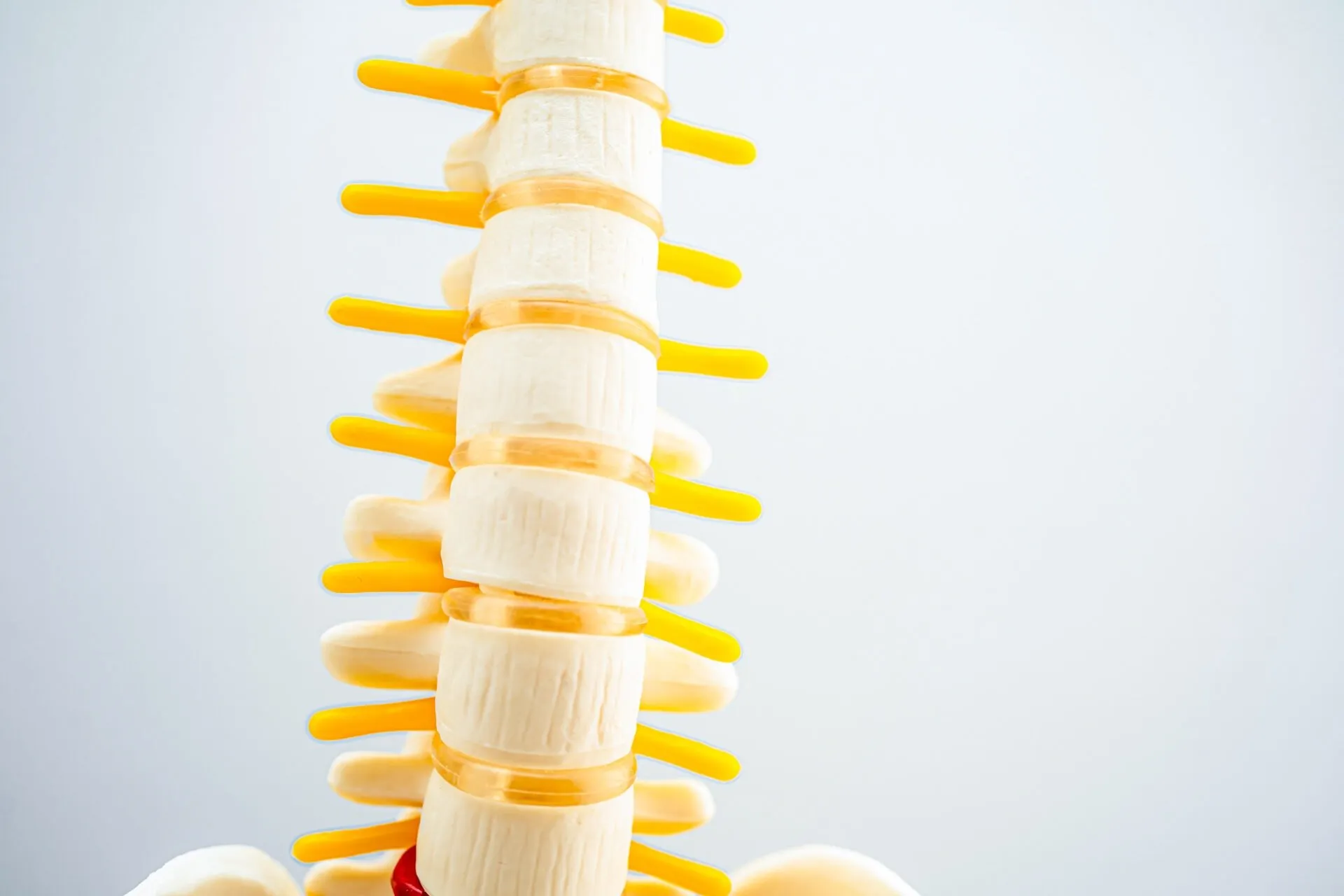
Spinal discs are the shock absorbers between the vertebrae. When a disc bulges, it extends beyond its normal boundary but stays intact. When it herniates, the outer layer tears and inner disc material pushes through, typically pressing more directly on a nearby nerve. Both conditions respond well to conservative care when the right tools are used.
- Deep, constant aching in the low back or neck
- Pain that radiates into the leg, foot, arm, or hand
- Numbness or tingling along the nerve's path
- Muscle weakness in the affected limb
- Pain that worsens with sitting, bending, or coughing
What Causes Disc Problems?
Disc injuries rarely happen in a single moment. Most are the result of gradual wear combined with a triggering event, which is why they often seem to come out of nowhere despite years of accumulated strain.
- Age-related disc dehydration that makes the outer layer more prone to tearing
- Prolonged sitting with a forward lean, especially at a desk or behind the wheel
- Repetitive bending, twisting, or heavy lifting that loads the disc unevenly over time
- A car accident , fall, or sports impact that put sudden force through the spine
- Years of compensating for an old injury that altered how load is distributed
How Within Chiropractic Treats Disc Problems in Colleyville
Dr. Thompson identifies the specific disc level involved through digital X-rays and a full neurological and orthopedic exam before recommending any treatment. The approach depends on what the imaging shows and whether there is significant nerve involvement.

Spinal Decompression
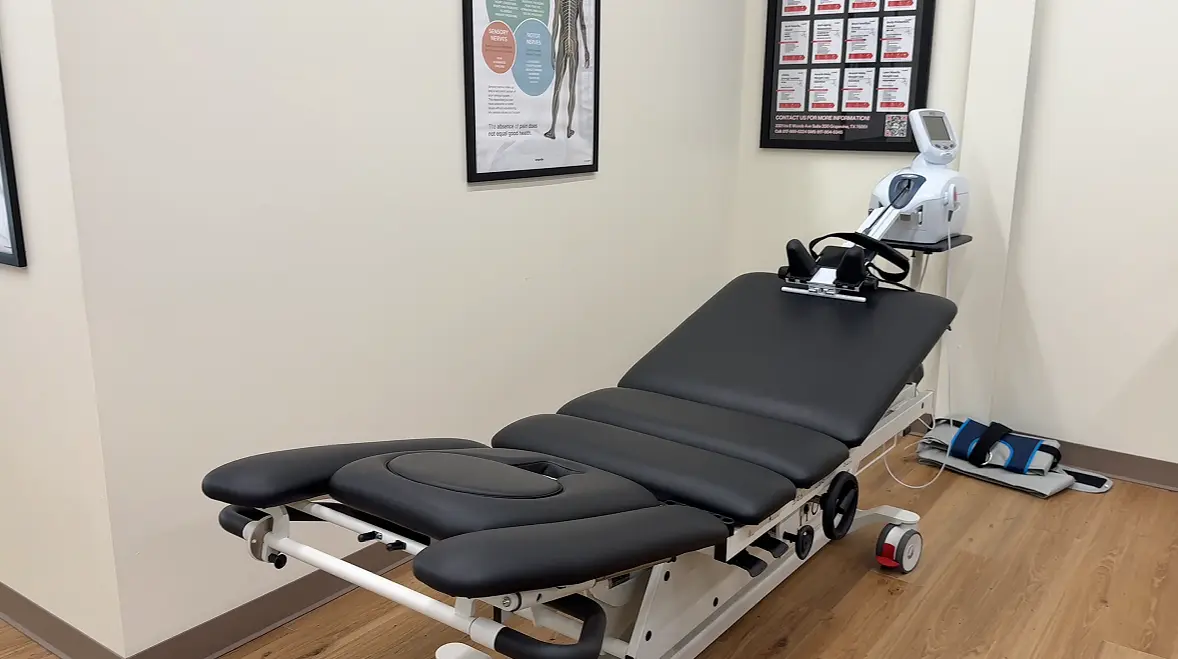
Spinal decompression is the primary tool for disc-related pain at Within Chiropractic, and for good reason. The therapy creates a controlled negative pressure inside the affected disc that allows bulging or herniated material to retract toward the center, takes direct load off the compressed nerve root, and draws fluid and nutrients back into the damaged tissue so it can heal. For patients with leg or arm symptoms from disc compression, it's often the treatment that finally makes sense given what their imaging shows.
Chiropractic Adjustments
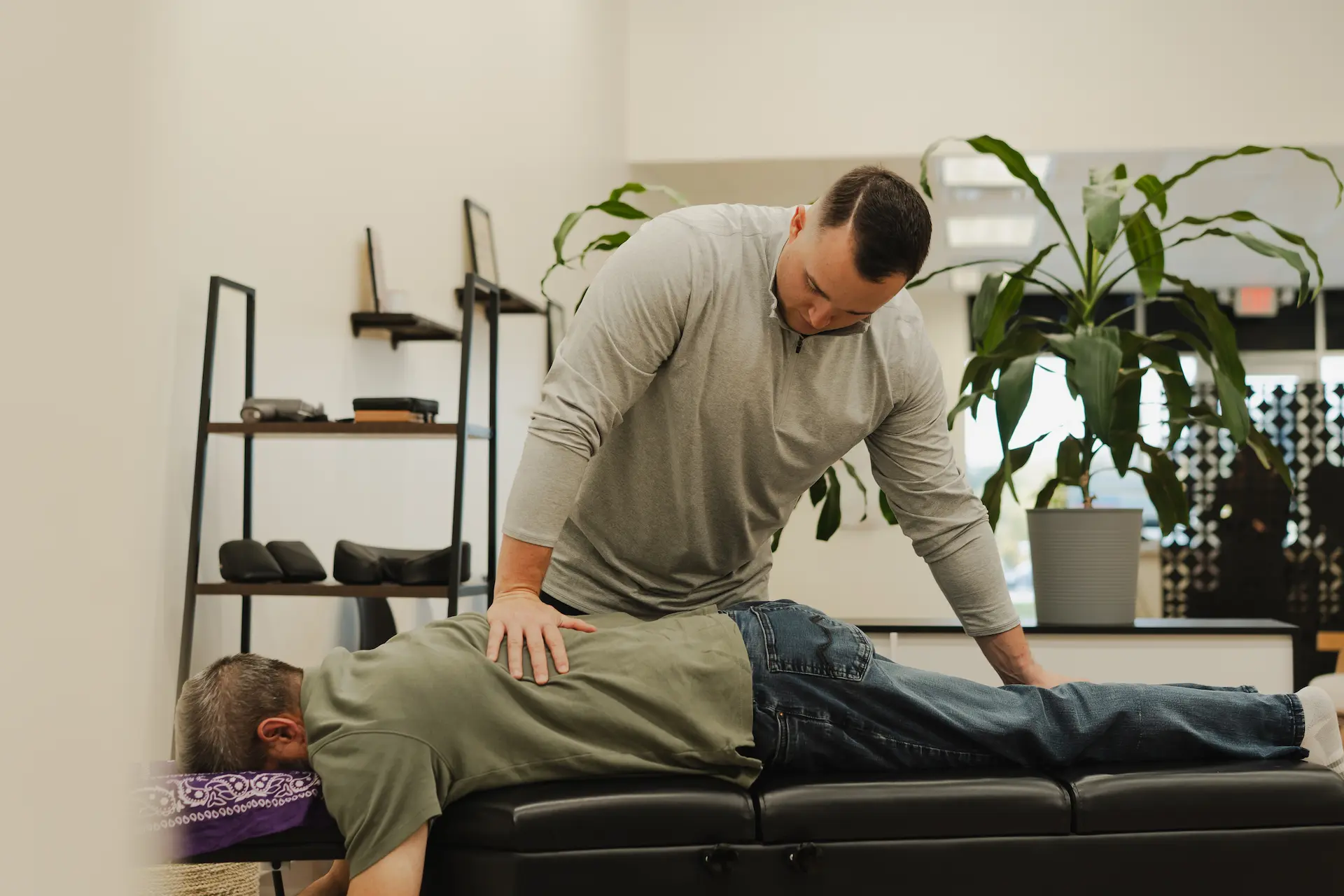
Alongside decompression, chiropractic adjustments restore proper motion and positioning to the spinal segments around the affected disc. Restricted joints above and below a disc problem increase the mechanical load on that disc. Correcting those restrictions distributes load more evenly and supports the decompression process.
Most Disc Problems Don't Require Surgery
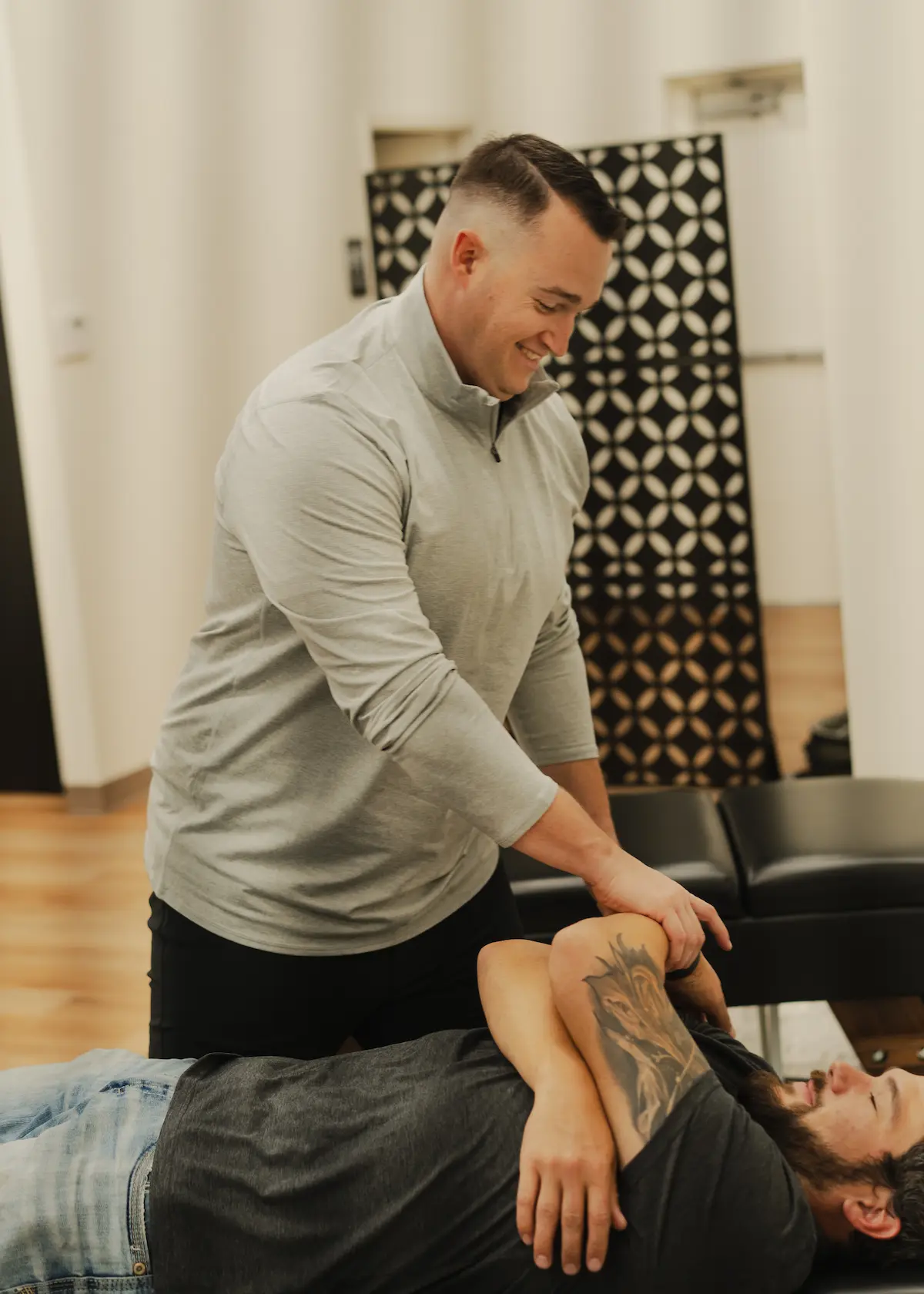
The majority of herniated and bulging disc cases respond well to conservative care without surgery. While surgery may be necessary in cases involving severe neurological compromise, such as loss of bowel or bladder function or rapidly progressing weakness, most patients experiencing disc-related pain, numbness, or sciatica are appropriate candidates for non-surgical treatment.
The body also has the ability to reabsorb herniated disc material over time when the underlying mechanical pressure is reduced. Spinal decompression and chiropractic adjustments are designed to support that process by improving the environment around the affected disc. Dr. Thompson will provide an honest assessment of whether conservative care is appropriate for your case or if a referral is the better option.
- No hospital stay or recovery downtime
- No risk of surgical complications or failed back surgery syndrome
- Preserves the disc's natural structure and function
- Addresses the mechanical cause rather than removing the symptomatic disc
Frequently Asked Questions About Disc Pain
Can chiropractic actually fix a herniated disc or just manage the pain?
For many patients, conservative care including spinal decompression and chiropractic adjustments does more than manage pain. The negative pressure created during decompression can allow herniated disc material to retract, and the body’s natural healing process can reabsorb disc material over time when the mechanical environment supports it. Whether that applies to your specific case depends on the severity and duration of the herniation, which Dr. Thompson will assess at your first visit.
Do I need an MRI before starting treatment?
Not necessarily. Dr. Thompson can identify disc involvement through orthopedic and neurological testing and digital X-rays. If imaging beyond X-ray is warranted, he’ll discuss that with you. If you already have MRI results, bring them along.
Is it safe to get adjusted if I have a herniated disc?
Yes, with appropriate technique selection. Dr. Thompson’s approach for disc patients is typically more targeted and lower-force, particularly in the early stages of care. Spinal decompression is specifically designed for disc conditions and is safe and comfortable for the vast majority of patients.
How long does recovery from a disc problem take?
It depends on the severity of the herniation, how long it’s been present, and how the body responds to care. Most patients begin noticing meaningful improvement within the first several visits. Full recovery for significant disc herniations typically takes several weeks to months of consistent care.
Ready to Get Relief from Disc Pain in Colleyville?
If you’ve been told surgery or injections are your only options, it’s worth finding out what conservative care can do first.