


Headache and Migraine Relief in Colleyville, TX

Many chronic headaches originate in the cervical spine, not the head – Within Chiropractic identifies and treats the upper cervical dysfunction that drives them.

A man in a grey shirt stands with his hand on his forehead, looking distressed.

More Than Just a Headache

The cancelled plans. The reaching for medication that takes the edge off but doesn’t fully resolve it. The pattern of waiting for it to pass and hoping tomorrow is better. For patients dealing with recurring headaches, this cycle becomes so familiar it starts to feel normal.

Here’s what most headache patients have never been told: a significant number of chronic headaches, including tension headaches and many migraines, have a cervical component that has never been identified or addressed. When the joints and muscles of the neck are under chronic strain, they generate pain signals that travel directly into the head through well-mapped nerve pathways. The headache feels like it’s coming from the head because that’s where it hurts. But the source is often in the neck.

Why Your Headaches May Be Coming From Your Neck

The upper cervical spine, particularly C1, C2, and C3, connects directly to the nerves that supply sensation to the head, face, and scalp. When these joints are restricted or the surrounding muscles are chronically tight, they generate referred pain patterns that feel exactly like a headache originating in the head. This is called a cervicogenic headache, and it’s more common than most patients realize.

Beyond cervicogenic headaches, emerging evidence suggests that cervical dysfunction may also lower the threshold for migraine episodes in people who are prone to them. The patterns that most suggest cervical involvement: headaches that are worse after long periods at a desk or device, pain that starts at the skull base and radiates forward, and headaches that coincide with neck stiffness. Learn more about Neck Pain

Types of Headaches Dr. Thompson Addresses

Not all headaches are the same, and the approach varies based on what’s driving the pattern.

Tension Headaches

The most common type. A band of pressure around the head that often builds through the day. Almost always involves chronic muscle tension in the neck, shoulders, and upper back. Cervical adjustments and soft tissue work are highly effective for this pattern.

Cervicogenic Headaches

Headaches that originate from specific joints or muscles in the cervical spine. Usually one-sided and felt from the back of the skull forward. One of the clearest candidates for chiropractic care because the source is mechanical and directly treatable.

Migraines with a Cervical Component

Migraines are complex neurological events with multiple potential triggers. For many migraine patients, cervical dysfunction is a contributing factor that, when addressed, reduces episode frequency and intensity. Chiropractic works alongside medical migraine management, not instead of it. Dr. Thompson will never advise stopping prescribed medication.

Posture and Screen-Related Headaches

Forward head posture from extended screen time creates chronic strain on the upper cervical structures that feeds directly into headache patterns. Posture correction alongside cervical adjustments addresses both the structural cause and the postural habit driving it. Learn more about posture correction

How Dr. Thompson Treats Headaches in Colleyville

Close-up of a person's hands, wearing a gold ring, pressing on the lower back of another person wearing olive green pants and blue jeans.

Chiropractic Adjustments

Upper cervical adjustments, particularly at C1, C2, and C3, are the primary tool for cervicogenic headaches and the cervical component of tension and migraine patterns. Adjustments for headache patients are typically focused and precise, targeting the specific levels identified through Dr. Thompson's exam.
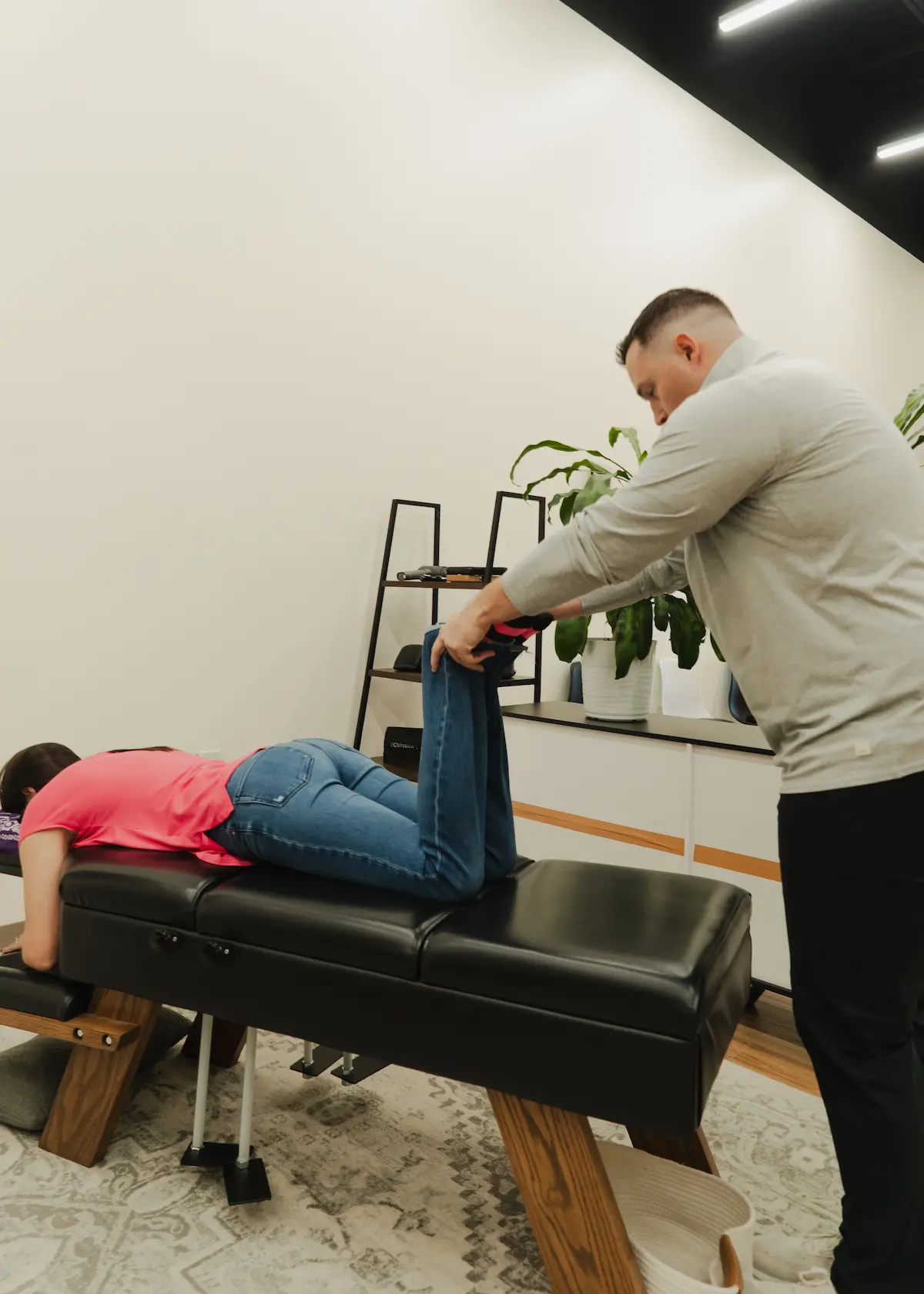
A male chiropractor adjusts the legs of a female patient lying face down on a black table.

Posture Correction

For patients whose headaches are driven by forward head posture and chronic cervical strain, posture correction is a critical part of lasting relief. Digital posture analysis gives Dr. Thompson an objective picture of what's loading the upper cervical spine, and correction is built into the care plan systematically.

Frequently Asked Questions About Headaches and Migraines

Can chiropractic actually help with migraines, or just tension headaches?

Both, with appropriate nuance. Chiropractic has strong evidence for tension-type and cervicogenic headaches. For migraines, the picture is more qualified. Many migraine patients have a cervical component that, when addressed, reduces episode frequency and intensity. Chiropractic doesn’t cure all migraines, but for patients with a clear cervical contribution, it regularly makes a meaningful difference.

Will I need to stop taking my headache or migraine medications?

No. Chiropractic care works alongside medical management, not instead of it. Dr. Thompson will never advise changes to your prescribed medication. If you’re seeing a neurologist, chiropractic care is complementary to that relationship.

How do I know if my headaches are coming from my neck?

Patterns that suggest cervical involvement include headaches that correlate with neck stiffness, start at the base of the skull, worsen after prolonged screen time, or improve with heat applied to the neck. Dr. Thompson’s exam will identify whether cervical dysfunction is a factor in your specific pattern.

Are there warning signs that mean my headache needs immediate medical attention?

Yes. A sudden severe headache unlike any you’ve had before, a headache with fever and stiff neck, headache following head injury, or headache accompanied by confusion, vision changes, or neurological symptoms require immediate medical evaluation rather than chiropractic care. Dr. Thompson screens for these presentations.

Ready to Find Real Relief from Headaches and Migraines in Colleyville?

If you’ve been managing headaches for years without getting to the actual cause, it may be time to look at what your neck is doing.