
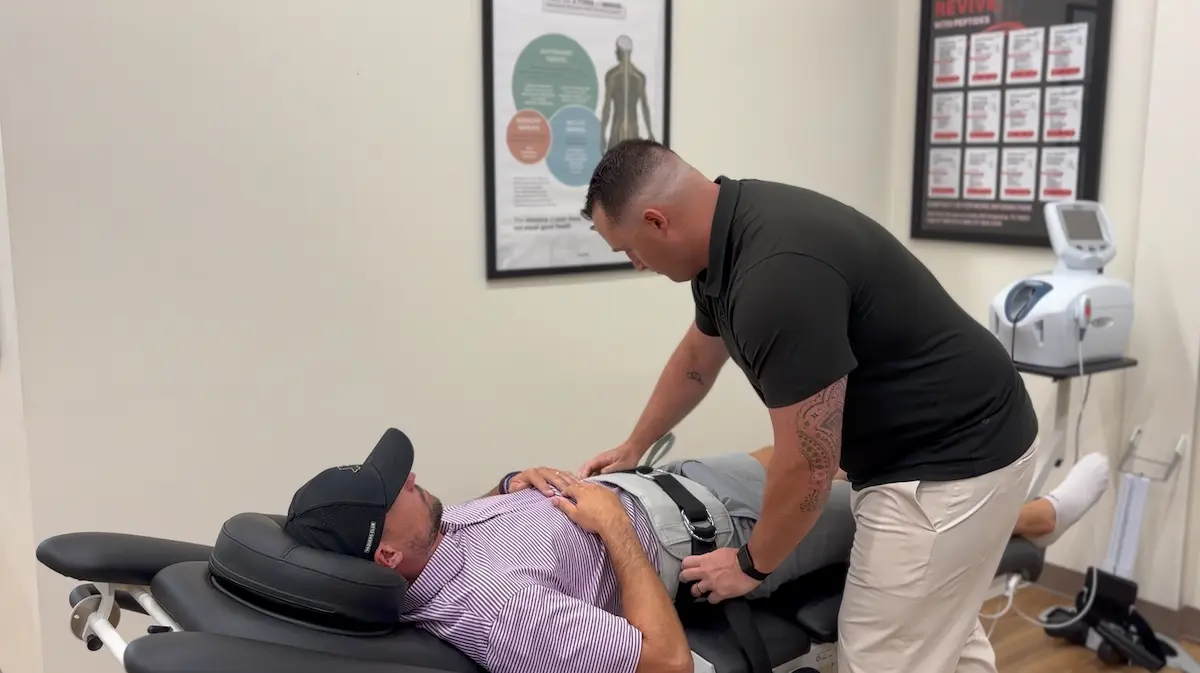
Spinal decompression is a non-surgical treatment that gently reduces pressure on spinal discs and nerves, most commonly used for herniated or bulging discs, chronic sciatica, and back or neck pain that hasn’t responded to adjustments alone. It’s a comfortable, computer-controlled process, and for many patients it’s a real alternative to injections or surgery.
How Spinal Decompression Works
Decompression uses a gentle, computer-controlled traction force that alternates between stretch and release phases. That alternating pattern is what separates it from standard traction, which pulls continuously and can cause the surrounding muscles to guard against the stretch instead of relaxing into it.
The stretch-and-release cycle reduces pressure inside the disc itself. That reduction in pressure can allow bulging or herniated material to retract away from the nerve it’s compressing, while also helping draw oxygen and nutrients back into the disc to support the healing process.
What a Session Actually Feels Like
Sessions run 15 to 30 minutes. Most patients describe it as relaxing, sometimes even falling asleep during treatment. Some feel a mild pulling sensation, which is completely normal and not painful.
Decompression is available for both the neck (cervical) and lower back (lumbar), depending on where your disc issue is located.
Who Decompression Is a Good Fit For
Decompression tends to be most effective for:
- A confirmed herniated or bulging disc on imaging
- Chronic sciatica with ongoing leg symptoms
- Back pain or neck pain that hasn’t fully resolved with chiropractic adjustments alone
- Patients who specifically want to avoid injections or surgery
- Degenerative disc disease with nerve involvement
Who It’s Not Right For
Decompression isn’t appropriate for every patient. Fractures, severe osteoporosis, certain spinal implants, and active cancer in the spine all rule it out. This is exactly why a thorough exam always comes before treatment, not after, so decompression is only recommended when it’s genuinely the right tool for what’s going on.
Why It’s Rarely Used Alone
Decompression is most effective as part of a broader plan rather than a standalone treatment. It’s commonly paired with chiropractic adjustments and soft tissue therapy, since reducing pressure in the disc works best alongside correcting the surrounding joint restrictions contributing to the problem in the first place.
At Within Chiropractic, this starts with a two-visit intake. The first visit includes the exam, imaging, and an initial relief adjustment. The second visit is dedicated to a full report of findings and a specific care plan, built around what your exam and imaging actually show. Dr. Thompson reviews every case personally before that plan is presented.
Frequently Asked Questions
Is spinal decompression covered by insurance?
Coverage varies by plan. Within Chiropractic is in-network with BCBS of Texas, and financing is available for out-of-pocket patients.
How many sessions will I need?
This depends on your specific condition and how it responds to treatment. Your care plan will lay out realistic expectations based on your exam findings.
Is decompression the same as regular traction?
No. Standard traction pulls continuously and can trigger muscle guarding. Decompression alternates between stretch and release, which avoids that response and allows for a deeper reduction in disc pressure.
Do I need imaging before starting decompression?
Yes. A thorough exam, including imaging, comes first to confirm decompression is appropriate and to rule out conditions it isn’t suited for.
If you’re dealing with a herniated disc, bulging disc, or chronic sciatica and want to know if decompression is right for you, become a new patient or call 682-343-6801 to schedule an exam in Colleyville.