Googling Chiropractor for TMJ pain? Jaw pain that shows up as clicking, tightness, or an ache near your ear does not always start in the jaw itself. In many cases, the real driver is dysfunction in the upper cervical spine and the muscles connecting your neck, jaw, and skull. If your TMJ symptoms have not fully resolved with jaw-focused treatment alone, it may be worth having your neck and posture evaluated too.
What TMJ Pain Actually Feels Like
TMJ, or temporomandibular joint dysfunction, usually shows up as jaw pain, clicking or popping when you chew, tightness around the temples, and sometimes pain that radiates into the ear. Some patients also notice headaches that seem to start behind the eyes or at the base of the skull.
Most people assume this all comes from the jaw joint itself. And sometimes it does. But the jaw does not work in isolation. It is directly tied to the muscles and joints of your neck, and problems in one area routinely show up as symptoms in the other.
The Neck and Jaw Are More Connected Than Most People Realize
Shared Muscles, Shared Problems
Several muscles that control jaw movement, like the muscles around the temples and the ones running down the side of your neck, also attach to the cervical spine. When your neck is under strain from poor posture, an old injury, or restricted joint movement, those same muscles tend to tighten and guard. That tension does not stay isolated. It pulls on the jaw too.
The Upper Cervical Spine and Referred Pain
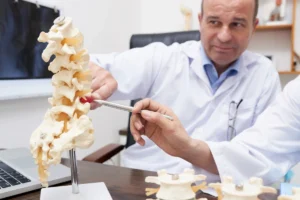
The top of your neck, specifically the C1 through C3 vertebrae, has a dense concentration of nerves that overlap with nerves supplying the head, jaw, and face. This is the same mechanism behind cervicogenic headaches and migraines, where dysfunction in the neck refers pain into the head. Jaw pain can follow a similar pattern. The joint feels like the problem, but the source is a few inches away.
How Forward Head Posture Feeds TMJ Symptoms
Hours spent looking down at a phone or leaning toward a screen gradually pull the head forward from the shoulders. For every inch the head drifts forward, the effective load on the cervical spine roughly doubles. That added strain tightens the same muscles that support jaw function, and over time it can make TMJ symptoms worse or harder to resolve.
This is one reason two patients can have nearly identical jaw symptoms and need very different treatment plans. One might need work focused mostly on the jaw. The other might need their posture and neck pain addressed first before the jaw settles down.
Signs Your Jaw Pain Might Be Neck-Related
A few patterns tend to point toward the neck as a contributing factor:
- Jaw pain that gets worse after long stretches at a desk or on your phone
- Neck stiffness or tightness that shows up around the same time as jaw symptoms
- Headaches at the base of the skull along with jaw discomfort
- Jaw treatment alone (night guards, dental adjustments) has helped some, but not fully
- A history of whiplash, a fall, or another neck injury before symptoms started
What a Chiropractic Evaluation Looks Like at Within Chiropractic
Every new patient at Within Chiropractic in Colleyville starts with a thorough exam, including digital posture analysis and an orthopedic assessment, before any treatment plan is put together. If you come in with jaw symptoms, that same process is used to check whether cervical dysfunction or forward head posture is part of what is driving them.
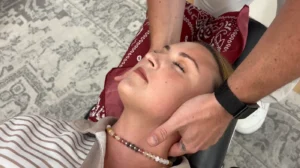
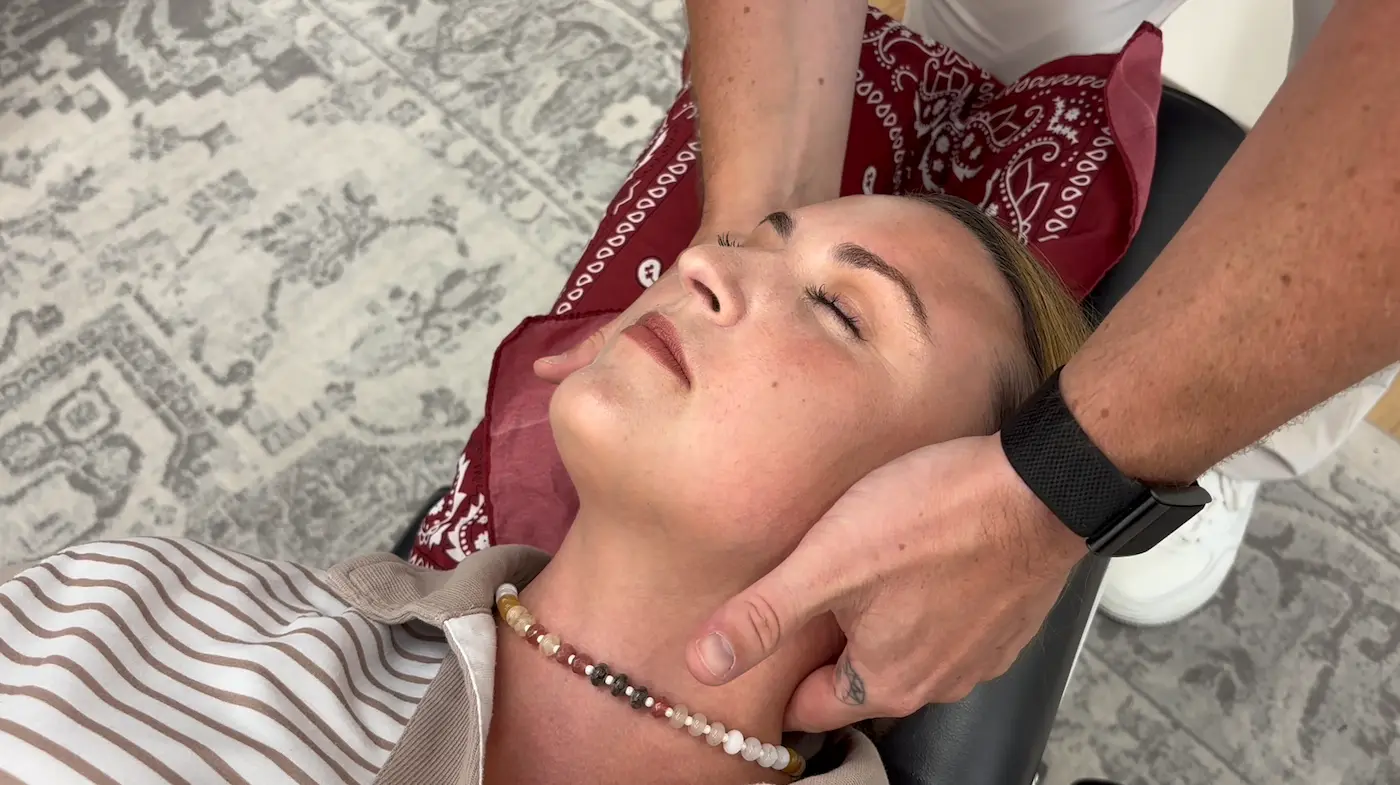
Treatment typically focuses on the neck and surrounding soft tissue rather than the jaw joint itself. That can include chiropractic care to restore normal movement in the cervical spine, soft tissue work to release chronically tight muscles, and a posture correction plan aimed at reducing the forward head positioning that keeps reloading those muscles. Dr. Thompson’s background gives him a particular interest in how movement patterns and biomechanics contribute to problems like this. You can read more about his approach on his bio page.
Reducing strain on your neck can also make a meaningful difference if you spend most of your day at a desk. We covered practical setup and habit changes in this previous post on preventing desk-related neck pain, and a lot of the same principles apply here.
When to See a Dentist or TMJ Specialist Instead (or In Addition)
Chiropractic care is not a replacement for dental or orthodontic evaluation when the TMJ disorder is structural, involving the joint, bite alignment, or the disc within the joint itself. If your jaw locks, you have significant clicking with pain on chewing, or a dentist has already identified a joint-specific issue, that evaluation should stay part of your care. In many cases, addressing the neck and addressing the joint work well together rather than one replacing the other.
Frequently Asked Questions
Can a chiropractor actually help with TMJ pain?
A chiropractor cannot treat the jaw joint directly the way a dentist or TMJ specialist can. What chiropractic care can help with is identifying and addressing neck dysfunction and posture patterns that may be contributing to or worsening your jaw symptoms.
Do I need a referral to be seen?
No referral is needed. You can schedule an evaluation directly.
How long does it take to notice a difference?
This varies by patient and depends on how much the neck is contributing to the symptoms. Some patients notice changes within a few visits, while others with longstanding postural patterns take longer.
Will this replace my night guard or dental treatment?
Not necessarily, and it is not meant to. Chiropractic care addresses the neck and postural side of the picture. If your dentist has you on a night guard or other treatment, that should continue alongside this care unless your dentist advises otherwise.
Ready to Get to the Root of Your Jaw Pain?
If your jaw pain has not fully resolved with jaw-focused treatment alone, it may be worth having your neck and posture evaluated too. Schedule a visit or call us at 682-343-6801 to get started.