
Sacroiliac (SI) joint dysfunction happens when the joints connecting your spine to your pelvis move too much or too little, causing pain in the lower back, hip, or buttock, often on just one side. It’s frequently mistaken for a disc problem or general low back pain, which means it can go untreated for months. The good news is that once it’s correctly identified, it typically responds well to targeted chiropractic care.
What Is the SI Joint, and Why Does It Cause Pain?
Your sacroiliac joints sit on either side of your spine, right where it meets your pelvis. They’re built to handle a small amount of movement, just enough to absorb shock when you walk, run, or shift your weight. When one of these joints becomes too mobile (hypermobile) or too stiff (hypomobile), the surrounding muscles and ligaments compensate, and that’s where the pain starts.
Here’s the tricky part. SI joint pain often mimics other conditions. It can feel like lumbar back pain. It can radiate down the leg and mimic sciatica. Patients frequently spend months treating the wrong problem before anyone identifies the actual source.
Common Signs of SI Joint Dysfunction
Not every case looks the same, but a few patterns show up again and again in patients we see in Colleyville:
- Pain concentrated on one side of the lower back or buttock
- Discomfort that worsens with standing up from sitting, climbing stairs, or rolling over in bed
- A feeling of instability in the pelvis or hip
- Pain that sometimes radiates into the thigh but rarely goes past the knee
- Stiffness after long periods of sitting, followed by a dull ache when you finally stand
That last one is something we hear constantly. The stiffness that sets in after twenty minutes in a chair, then the slow, achy walk to loosen back up, that’s a classic pattern pointing toward pelvic or SI joint involvement rather than a purely muscular issue.
Why SI Joint Dysfunction Gets Missed
Because SI joint pain can radiate into the leg, it’s commonly confused with sciatica caused by a disc problem. The treatment approach is different for each, so an accurate diagnosis actually matters here. Imaging like X-rays don’t always show SI joint dysfunction clearly either, since the issue is often about joint movement and alignment, not visible structural damage.
This is why a thorough orthopedic exam matters so much. At Within Chiropractic, every new patient goes through a full assessment, not just a quick look at where it hurts, before any care plan is presented. That process is specifically designed to catch things like SI joint dysfunction that get missed in a rushed exam.
How Chiropractic Care Helps
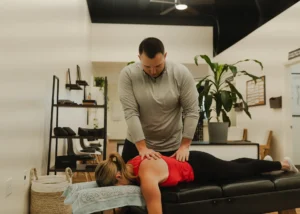
Treatment depends on whether the joint is too mobile or too stiff, which is exactly why an accurate exam comes first as part of every chiropractic care plan. In many cases, care includes:
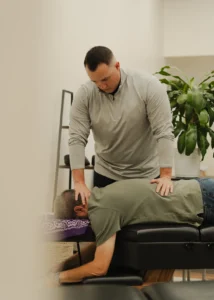
- Chiropractic adjustments to restore proper joint motion and pelvic alignment
- Soft tissue therapy to release the muscles compensating around the joint
- Mobility and stability exercises to help the correction hold between visits
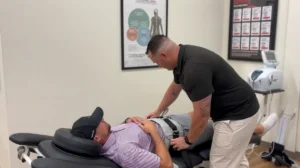
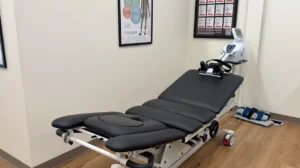
Dr. Thompson uses a combination of Diversified, Thompson Drop Table, and Activator techniques depending on what a patient’s presentation calls for. For SI joint work specifically, the Thompson Drop Table is often a comfortable option since it reduces the force needed for pelvic corrections.
When to See Someone About It
If you’ve been dealing with one-sided low back or hip pain for more than a couple of weeks, especially if it worsens with sitting or specific movements, it’s worth getting an actual assessment rather than guessing. Active adults in Colleyville who run, lift, play golf, or spend a lot of time at a desk are all common candidates for this kind of pelvic imbalance.
If pelvic or joint pain is tied to how you move day to day, our post on sports injuries and biomechanics covers related movement-pattern issues worth a look.
Frequently Asked Questions
Is SI joint pain the same as sciatica?
Not exactly. They can feel similar and even overlap, but sciatica is nerve-related pain typically from the spine, while SI joint dysfunction originates in the pelvis. An exam can tell the difference.
Do I need a referral to be seen?
No referral is needed. You can schedule directly with Within Chiropractic for an evaluation.
Will it just go away on its own?
Mild cases sometimes improve with rest and time, but ongoing or recurring pain usually points to an underlying joint or alignment issue that needs to be addressed directly.
Get an Accurate Diagnosis
If one-sided back or hip pain has been sticking around, don’t guess at the cause. Schedule a visit or call us at 682-343-6801 and let’s find out what’s actually going on.