If you get frequent head pain, telling a tension headache from a migraine usually comes down to a few clues. Tension headaches tend to feel like a dull, tight band of pressure on both sides of the head, while migraines more often throb on one side and bring along nausea, light sensitivity, or visual changes. Knowing which one you are dealing with matters, because the two respond to different things. And for a lot of people in Colleyville, there is a third factor that gets missed completely: the neck.
How a Tension Headache Usually Feels
Tension headaches are the most common type, and most people have had at least one. The pain is typically mild to moderate, described as tightness or pressure rather than a sharp or pulsing pain.
It often sits across the forehead, at the temples, or wraps around the back of the head like a band. Both sides are usually involved, and physical activity does not usually make it dramatically worse.
These headaches are frequently tied to stress, long hours at a screen, clenching the jaw, or holding the shoulders up around the ears without realizing it. The muscles at the base of the skull and along the neck get tight, and that tension refers pain up into the head.
How a Migraine Usually Feels
A migraine is a different experience. The pain is often moderate to severe, tends to throb or pulse, and frequently affects one side of the head, though it can shift or involve both.
Migraines usually come with other symptoms. Nausea, sensitivity to light and sound, and a need to lie down in a dark, quiet room are common. Some people get an aura beforehand, which can include visual disturbances like flashing lights, blind spots, or zigzag lines.
Movement often makes a migraine worse, which is part of why people withdraw and stay still during an episode. Triggers vary from person to person and can include certain foods, hormonal shifts, poor sleep, dehydration, and stress.
The Overlooked Third Cause: Your Neck
Here is what a lot of headache patients have never been told. Many chronic headaches do not start in the head at all. They start in the upper neck, specifically the joints and muscles around the top three cervical vertebrae.
When those upper neck joints are restricted or irritated, they can refer pain into the head in a pattern that feels exactly like a tension headache or even mimics a migraine. This is called a cervicogenic headache, and it is one of the most commonly missed sources of recurring head pain.
Forward head posture, old whiplash injuries, and hours hunched over a phone all feed into this. If your headaches seem to build from the base of your skull or come with a stiff, achy neck, the neck connection is worth taking seriously. We break this down in more detail in our guide to headaches that come from the neck, and it is a core part of how we evaluate neck pain in Colleyville.
What Actually Helps Each Type
For tension and cervicogenic headaches
Because these are so closely tied to muscle tension and neck mechanics, the approaches that help tend to overlap. Regular movement breaks, better screen setup, stress management, and staying hydrated all make a real difference for many people.
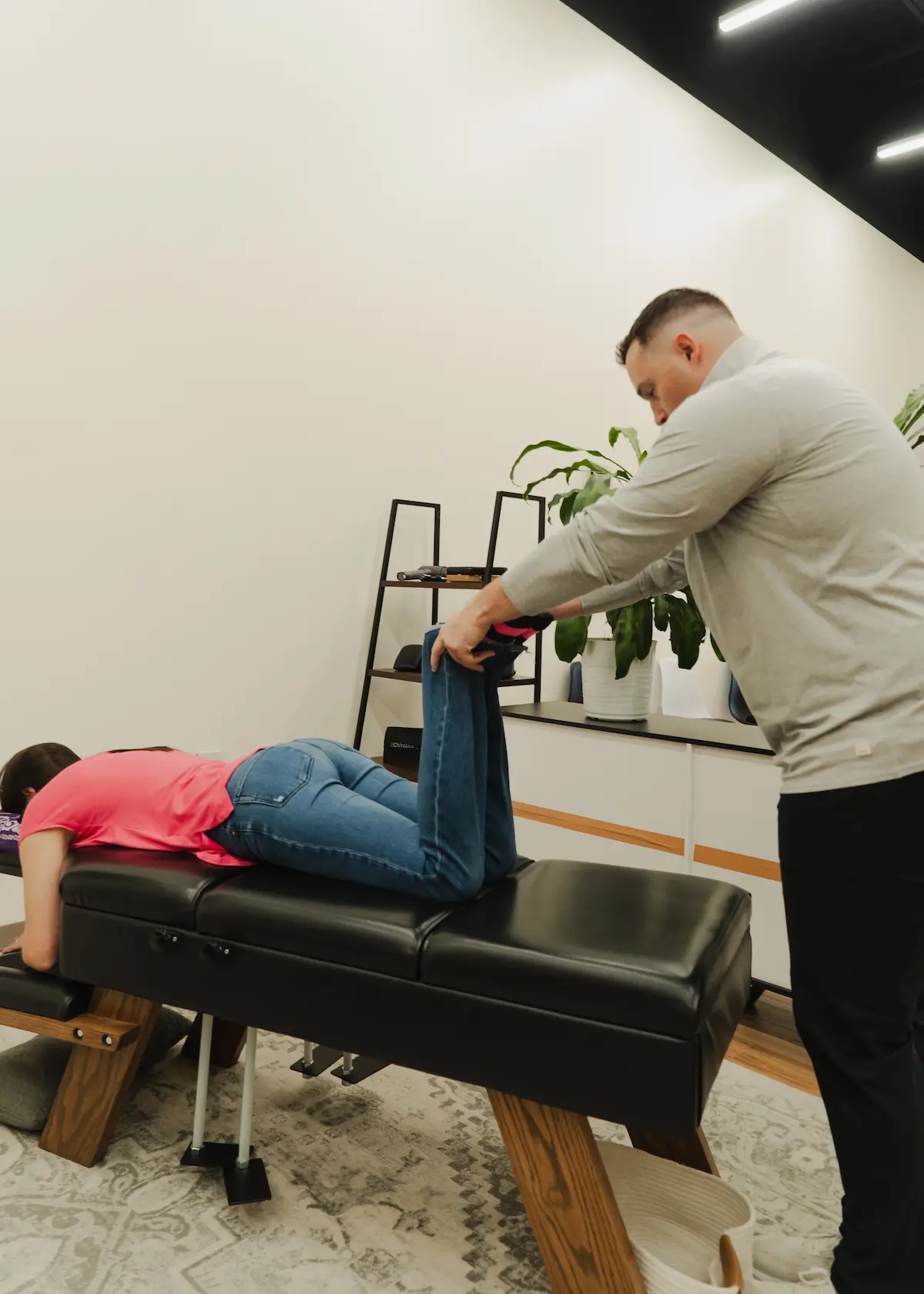
When the upper neck is a driver, hands-on care can help. Gentle chiropractic adjustments, soft tissue work on the tight muscles at the base of the skull, and mobility work to restore normal neck movement all aim at the mechanical source rather than just masking the pain. Our approach to chiropractic care starts by figuring out whether the neck is actually contributing before recommending anything.
For migraines
Migraines are more complex, and honesty matters here. Chiropractic care is not a cure for migraines, and it does not replace medical management. Dr. Thompson will never advise a patient to stop a prescribed migraine or headache medication.
That said, for people whose migraines have a neck component, addressing upper cervical dysfunction may help reduce how often episodes are triggered in some cases. It is best thought of as one supportive piece alongside whatever medical care you already have, not a standalone fix.
Keeping Track of Your Headaches
One of the most useful things you can do is pay attention to the pattern. When your headaches tend to hit, how long they last, where the pain sits, and what was happening beforehand all give real clues about the type.
Writing a few notes over a couple of weeks often reveals connections you would otherwise miss. If the pain reliably follows long afternoons at the computer, that points toward the tension and neck side of things. If it clusters around poor sleep, skipped meals, or specific triggers, that leans more toward migraine.
Bring that information to any evaluation. It helps a great deal when someone is trying to sort out whether your neck is involved and which approach actually fits you. The clearer the picture, the more targeted the plan, and the less time gets wasted guessing.
This is also the reason a rushed, one-size-fits-all approach tends to disappoint headache patients. Two people can describe the same head pain and have completely different drivers behind it, so identifying the actual cause is what makes treatment work.
When a Headache Needs a Doctor, Not a Chiropractor
Most headaches are not dangerous, but some warrant immediate medical attention. Go straight to a doctor or emergency care if you experience any of the following:
- A sudden, severe headache that comes on like a thunderclap
- A headache with fever and a stiff neck
- A headache that follows a head injury
- A headache paired with confusion, weakness, numbness, vision loss, or trouble speaking
- A headache that is clearly the worst of your life or feels different from anything before
These are not situations for chiropractic care. They need medical evaluation first.
Frequently Asked Questions
Can a chiropractor cure my migraines?
No, and anyone who promises that should raise a flag. Chiropractic care may help reduce headache frequency for people whose head pain has a neck-related component, but it works alongside medical care, not in place of it.
Do I need a referral from my doctor first?
No referral is needed to be seen. You can book an evaluation directly, and if we find that your headaches are not something chiropractic can help with, we will tell you and point you toward the right care.
How do I know if my headaches are coming from my neck?
A few signs point that way: pain that builds from the base of the skull, a stiff or tender neck, and headaches that worsen after long stretches at a desk or on your phone. A proper exam that checks upper neck movement is the clearest way to know.
Get Answers About Your Headaches
If your headaches keep coming back and you have never had the neck ruled in or out, that is worth doing. To schedule an evaluation at our Colleyville office, reach out through our contact page or call us at 682-343-6801.