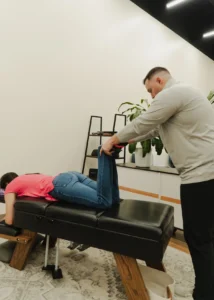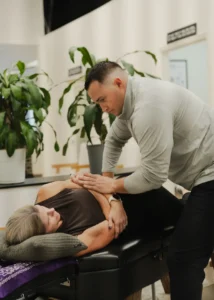

Chiropractic care can help runners in two ways: keeping small biomechanical problems from turning into injuries, and speeding recovery when something does flare up. Running is a repetitive, high-load activity, so the same stride repeated thousands of times will find any weak link in how your body moves. A chiropractor who looks at movement patterns, not just the sore spot, can often spot the actual cause of a nagging running injury. For active adults in Colleyville, that assessment-first approach is what makes the difference between a temporary fix and a real one.
Why Runners Get Hurt in the First Place
Most running injuries are not the result of one bad step. They build up over time from repetitive loading, and they usually trace back to how force moves through the body with each stride.
If your hips are not stabilizing well, your knees take extra stress. If your pelvis is slightly rotated or your ankle mobility is limited, the load has to go somewhere, and it tends to land on whatever joint is least prepared for it. The pain shows up at the symptom site, but the problem often lives somewhere else in the chain.
This is where Dr. Thompson’s background matters. Before chiropractic school, he earned a degree in Exercise Science, which means he looks at running injuries through a biomechanics lens first. The question is not only what hurts, but why the tissue got overloaded in the first place. You can read more about his approach on the Meet Dr. Zach Thompson page.
The Most Common Running Injuries We See
Runner’s knee
Pain around or behind the kneecap is one of the most frequent complaints. It is often driven by how the hip and pelvis control the leg during footstrike, not by a problem in the knee itself. Addressing hip stability and movement quality usually matters more than treating the knee in isolation.
IT band and hip pain
Tightness or pain along the outside of the thigh often connects back to the hip and the way the pelvis moves under load. The IT band is usually the messenger, not the source.
Low back and SI joint pain
Repetitive impact and rotation can irritate the lower back and the sacroiliac joints. A pelvis that is not moving evenly puts uneven stress on both sides with every stride.
Sciatica-type symptoms
Some runners feel pain, numbness, or tingling that travels down the leg. That is a nerve signal, and it can be triggered or worsened by training. When it shows up, the priority is figuring out where the nerve is being irritated. Our page on sciatica treatment in Colleyville covers the common causes.
Achilles and shin issues
Calf tightness, limited ankle mobility, and rapid jumps in mileage all feed into Achilles pain and shin problems. Mobility and load management are usually central to sorting these out.
How Chiropractic Care Fits Into Running
Good chiropractic care for a runner is not just an adjustment and a handshake. It starts with an assessment that looks at how you actually move, then builds a plan around what it finds.
That plan can include several pieces working together. Chiropractic adjustments restore normal joint motion where things have gotten restricted, which lets the surrounding muscles work the way they are supposed to. Soft tissue therapy releases the overworked muscles that have been compensating. Mobility and flexibility work retrains movement patterns so the correction holds between runs rather than slipping back.
Extremity joints matter too. Shoulders, hips, knees, and ankles can all be assessed and adjusted when relevant, which is important for runners since so many issues live below the spine. Our chiropractic care plans are built to address the movement chain, not just one joint.
Prevention: Staying Ahead of the Next Injury
The best time to see a chiropractor as a runner is before something goes wrong. Regular care can reduce the biomechanical stress that leads to overuse injuries, which is why some active patients keep up maintenance care between training blocks and race seasons.
Think of it as tuning the machine. When your joints are moving well and your movement patterns are clean, force distributes the way it should instead of piling onto one overloaded spot. That is the same reason a small imbalance caught early is far easier to handle than a full injury caught late. Runners across the Colleyville area use this kind of check-in to stay consistent with their mileage.
What a Running Assessment Actually Looks Like
A useful evaluation for a runner goes well beyond asking where it hurts. The intake is more detailed than a standard visit because the goal is to understand your movement, not just your symptom.
That usually means looking at how you move through key patterns, checking joint mobility from your ankles up through your hips and spine, and running standard orthopedic and neurological testing where it is warranted. Your training history matters too, since a recent jump in mileage, a change in shoes, or a new hill route can be the trigger behind an overuse injury.
The point is to find the weak link in the chain rather than chasing the pain around. When the assessment shows that a stiff ankle or an unstable hip is loading your knee, the plan targets that source. Treating the knee alone would only manage the symptom while the real driver keeps doing its thing.
This is where an Exercise Science background pays off in practice. Movement quality, load management, and biomechanics are the lens, so the plan is built around getting you back to running without setting up the next injury. It is a different approach than simply telling every athlete to rest and hoping the problem sorts itself out.
Frequently Asked Questions
Do I have to stop running to get treated?
Not always. In many cases the goal is to keep you moving with adjusted volume or intensity while the underlying issue is addressed. Complete rest is sometimes needed, but it is not the automatic answer.
I only have knee pain. Why would you look at my hips?
Because the site of pain and the source of pain are often different. Knee pain in runners frequently comes from how the hip and pelvis control the leg. Treating only the knee tends to give short-lived results.
Do you take runners of all levels?
Yes. Whether you are training for your first 5K or logging serious weekly mileage, the assessment approach is the same. What changes is the plan built around your specific movement and goals.
Run Without the Nagging Pain
If a running injury keeps interrupting your training, an assessment that looks at the whole movement chain is worth your time. To get evaluated at our Colleyville office, reach out through our contact page or call 682-343-6801. You can also learn more about how we treat sports injuries in Colleyville.