A bulging disc extends beyond its normal boundary but stays intact, while a herniated disc means the outer layer has torn and inner material is pushing through. Both can cause back pain, but a herniation is more likely to press directly on a nerve. The distinction matters because it shapes what kind of care actually helps.
What’s Actually Happening in Your Spine
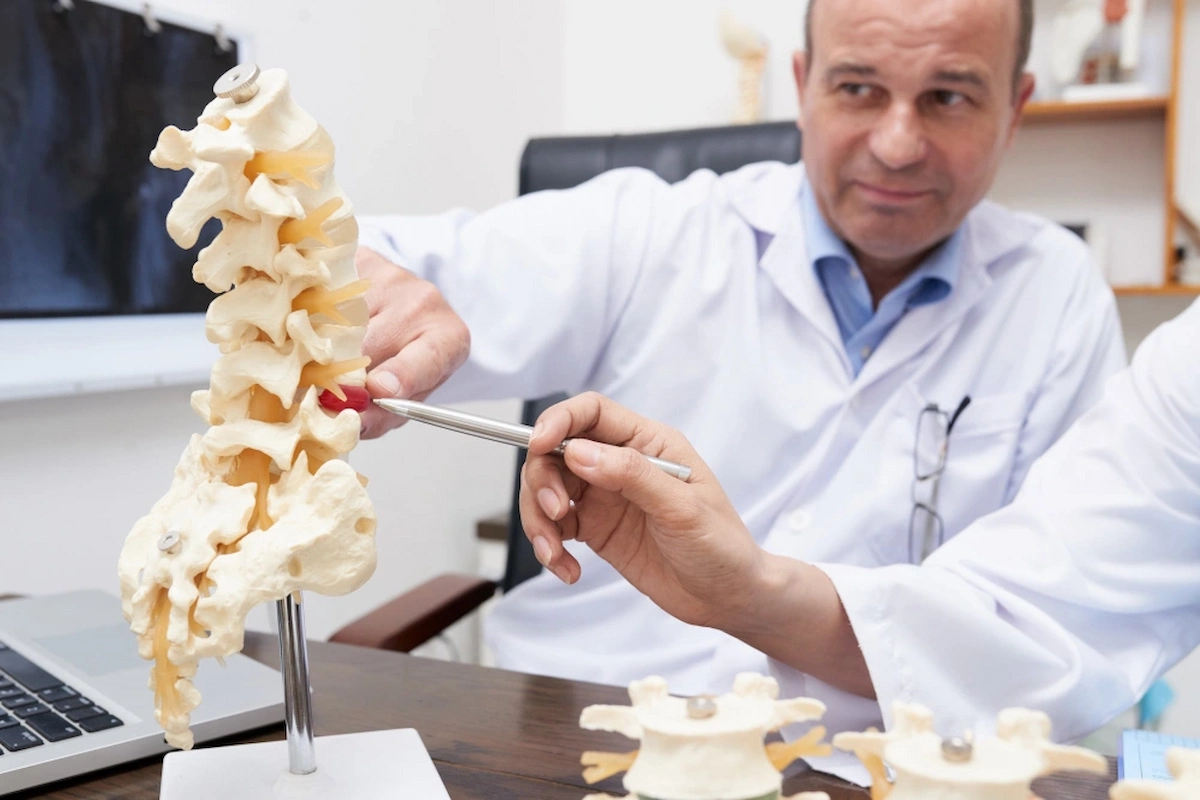
Think of a spinal disc like a jelly donut. It has a tougher outer ring (the annulus) and a softer center (the nucleus). With a bulging disc, that outer ring stretches out of its normal shape but doesn’t break open. With a herniated disc, the outer ring has actually torn, and some of that softer inner material pushes through the crack.
That difference in severity is why herniated discs are more likely to irritate or compress a nearby nerve root, which is often what causes pain, numbness, or tingling that travels down an arm or leg.
Symptom Differences
Bulging discs are sometimes found on imaging with no symptoms at all. When they do cause pain, it’s typically more localized, a dull ache or stiffness in the back or neck rather than nerve-related symptoms.
Herniated discs are more likely to cause:
- Sharp or radiating pain into the arm or leg
- Numbness or tingling along a specific nerve pathway
- Muscle weakness in the affected limb
- Pain that worsens with sitting, bending, or coughing
If pain travels from your lower back into your buttock or leg, that’s often a sign the disc issue is affecting a nerve, which is exactly the pattern we see with sciatica.
What Causes Each
Both share similar root causes:
- Age-related disc dehydration
- Prolonged forward-lean sitting
- Repetitive bending, twisting, or heavy lifting
- A car accident, fall, or sports impact
- Compensation patterns from old, unrehabilitated injuries
Here’s the thing most people don’t realize: a bulging disc that isn’t addressed can progress into a herniation over time, especially if the same postural or mechanical stress keeps loading the same spot.
Do You Need Surgery?
Most disc problems, bulging or herniated, do not require surgery. Surgery is generally reserved for cases involving severe neurological compromise, like loss of bowel or bladder function or rapidly progressing weakness. Outside of those red flags, the body has a real ability to reabsorb herniated material over time once mechanical pressure on the disc is reduced.
How Chiropractic Care Addresses Both
Spinal decompression is typically the primary approach for disc issues. It creates a gentle, alternating traction force that reduces pressure inside the disc, allowing bulging or herniated material to retract and drawing oxygen and nutrients back into the disc to support healing.
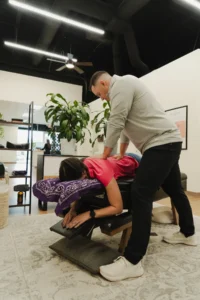
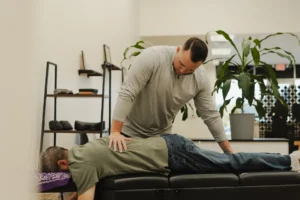
Chiropractic adjustments are often paired with decompression to reduce mechanical load from surrounding restricted joints, which takes some of the ongoing stress off the disc itself. Soft tissue therapy rounds this out by addressing the muscles compensating around the injury.
For a deeper look at how decompression compares to surgical options, see our post on spinal decompression vs. back surgery.
Frequently Asked Questions
Can a bulging disc turn into a herniated disc?
Yes, over time, especially if the underlying mechanical stress isn’t addressed.
Is decompression painful?
No. Most patients find it relaxing. Some feel a mild pulling sensation, which is normal.
Does insurance cover this care?
Coverage varies by plan. Within Chiropractic is in-network with BCBS of Texas, and financing options are available for out-of-pocket patients.
Find Out What You’re Actually Dealing With
Guessing whether it’s a bulge or a herniation isn’t necessary; imaging and a proper exam will tell you. Schedule an evaluation or call 682-343-6801 to get a clear answer.