If you’ve been told surgery might be in your future for a herniated disc, bulging disc, or chronic sciatica, it’s worth knowing that most disc problems don’t actually require it. Spinal decompression is a non-surgical option that reduces pressure on the disc and nerve, and for many patients, it resolves the problem before surgery ever becomes necessary. The right choice depends on what’s actually happening in your spine, not just how long you’ve been in pain.
Why This Comparison Comes Up So Often
Most people don’t wake up thinking about spinal surgery. It usually comes up after months of back pain, a scary MRI report, or a conversation with a doctor who mentions it as an option down the road.
Here’s the thing: an MRI showing a herniated or bulging disc doesn’t automatically mean surgery is the answer. A lot of patients hear “herniated disc” and assume the next step is an operating room. In most cases, it isn’t.
What Spinal Decompression Actually Does
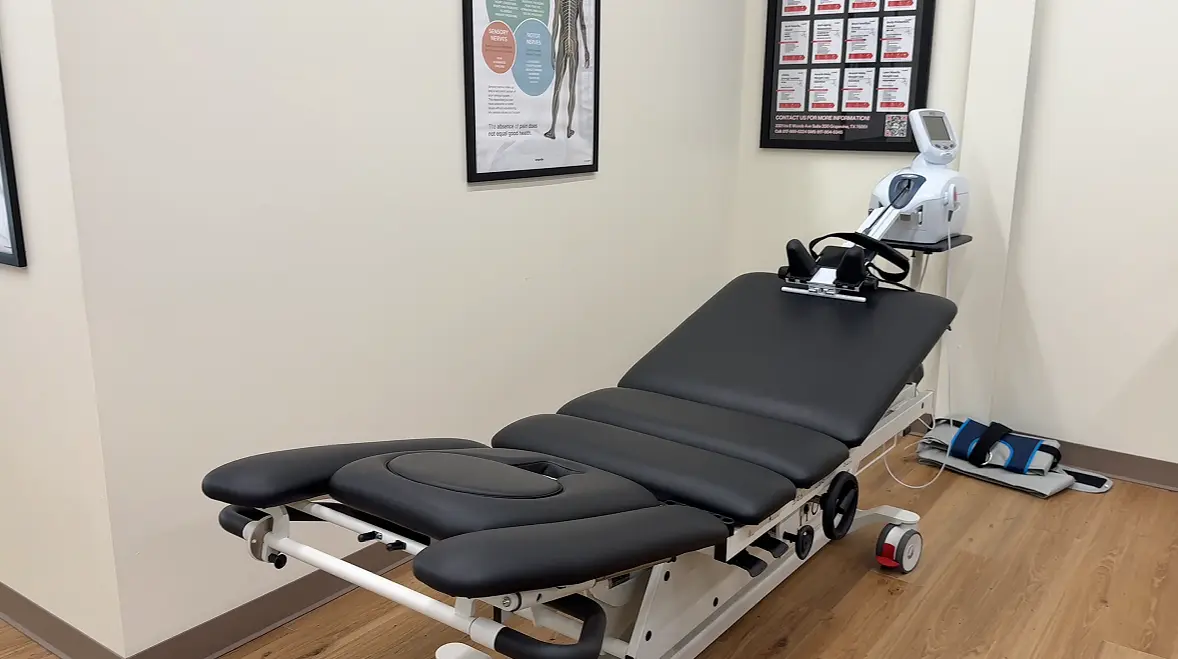
Spinal decompression uses a gentle, computer-controlled traction force that alternates between stretch and release phases. That alternating pattern is the key difference between decompression and old-school traction, which pulls continuously and can trigger the muscles to guard against it.
The stretch-and-release cycle reduces pressure inside the disc itself. That drop in pressure can allow bulging or herniated material to retract, and it helps draw oxygen and nutrients back into the disc to support healing. It’s a mechanical, measurable process, not a stretch you could replicate on your own.
What a Session Actually Feels Like
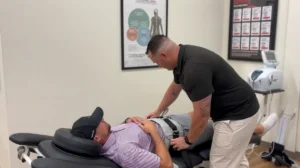
Sessions run 15 to 30 minutes. Most patients find it relaxing, almost like a slow, rhythmic pull. Some feel a mild stretching sensation, which is normal and not painful. It’s not dramatic, and that’s kind of the point.
Decompression is available for both the neck (cervical) and lower back (lumbar), depending on where the disc issue is located.
When Surgery Actually Makes Sense
Surgery isn’t off the table entirely, and it shouldn’t be. It’s reserved for specific situations: severe neurological compromise like loss of bowel or bladder function, or rapidly progressing weakness in a leg or foot. Those are red flags that need immediate medical attention, not a chiropractic care plan.
Short of that, most disc problems respond to a combination of decompression, chiropractic adjustments, and soft tissue therapy. The body has a real ability to reabsorb herniated material over time once the mechanical pressure causing it is reduced. That’s not a guarantee for every case, but it’s the reason non-surgical care is worth trying first for the vast majority of patients.
Who’s a Good Candidate for Decompression (and Who Isn’t)
Decompression tends to work well for:
- A confirmed herniated or bulging disc on imaging
- Chronic sciatica with leg symptoms that haven’t resolved
- Back or neck pain that hasn’t improved with adjustments alone
- Patients specifically wanting to avoid injections or surgery
- Degenerative disc disease with nerve involvement
It’s not appropriate for everyone. Fractures, severe osteoporosis, certain spinal implants, and active cancer in the spine all rule it out. That’s exactly why a thorough exam comes before any care plan, not after.
What This Looks Like at Within Chiropractic
Every new patient at Within Chiropractic goes through a two-visit intake. The first visit covers the exam, imaging, and an initial relief adjustment. Dr. Thompson uses the time between visits to fully review the findings, then the second visit is dedicated to a full report and a specific care plan built around what’s actually going on, not a generic protocol.
Decompression is rarely used on its own. It’s typically paired with chiropractic adjustments and soft tissue therapy, since reducing mechanical load on the surrounding joints supports the disc healing process rather than working against it.
If you’re in Colleyville or nearby in Grapevine, Southlake, Bedford, or Euless and you’re trying to figure out whether decompression or surgery is the right next step, Dr. Thompson can walk you through what your imaging actually shows before you commit to anything.
Frequently Asked Questions
Does spinal decompression hurt?
No. Most patients describe it as relaxing, with a mild stretching sensation at most. It’s not a painful process.
How long until I notice a difference?
It varies by case and how long the disc issue has been present. Some patients notice changes within a few weeks, while more chronic or complex cases take longer to respond. Your care plan will lay out realistic expectations based on your specific exam findings.
Is spinal decompression covered by insurance?
Coverage varies by plan. Within Chiropractic is in-network with BCBS of Texas, and financing options are available for patients paying out of pocket.
Do I need a referral from my doctor first?
No referral is needed. You can schedule directly for an exam to find out whether decompression is a fit for what you’re dealing with.
If you’re weighing your options for a herniated disc, bulging disc, or ongoing sciatica, contact Within Chiropractic or call 682-343-6801 to schedule an exam and find out what’s actually going on before deciding on surgery.