Yes, posture can be corrected in adults, and age is not the barrier most people assume it is. The spine and the muscles around it stay adaptable throughout life, so meaningful change is possible at 30, 50, or beyond. The honest caveat is that full correction takes consistent effort over time, not a single visit or a quick fix. For adults in Colleyville who have spent years at a desk, real improvement is realistic when the plan addresses the actual cause of the postural breakdown rather than just reminding you to sit up straight.
Why People Assume Posture Is Permanent
By the time most adults think about their posture, they have been living with it for a long time. The rounded shoulders and forward head feel like just how their body is now, so it is easy to assume the shape is locked in.
It is not. Bone remodels, muscles lengthen and shorten in response to how you use them, and joints respond to movement. What holds poor posture in place is usually a mix of tight muscles, weak muscles, and joints that have lost normal motion, and all three of those can be changed.
The reason “just stand up straight” never works is that willpower does not undo those underlying restrictions. The moment you stop thinking about it, your body drifts right back to the path of least resistance.
What Actually Happens to Posture Over Time
Understanding the mechanics helps explain why correction is possible and why it takes real work. Two patterns show up most often in adults.
The first is forward head posture. As the head drifts forward from the shoulders, the load on the cervical spine climbs quickly. For roughly every inch the head moves forward, the effective weight the neck has to support increases substantially. That is a big reason forward head posture ties so closely to neck pain in Colleyville and to tension headaches.
The second is what happens lower down. Years of sitting can flatten the natural curve of the lower back and shift the pelvis into a tilted position. That changes how load moves through the lumbar discs and joints, which is one of the quieter contributors to ongoing back pain.
What Posture Correction Can Realistically Do for Adults
Setting honest expectations matters, so here is the straight version. Posture correction in adults is not about achieving a perfect, magazine-cover spine. It is about restoring better alignment, reducing the strain that poor posture places on your joints, and giving you the strength and mobility to hold that improvement.
For many people, that translates into less neck and back tension, fewer posture-related headaches, and moving through the day with less stiffness. The degree of change depends on how long the pattern has been in place and how consistent the care is.
Someone in their forties who has been hunched at a desk for two decades can absolutely improve, but the timeline and the ceiling look different than for someone with a more recent pattern. That is not a reason to skip it. It is a reason to start.
What the Correction Process Looks Like
Effective posture correction works on several fronts at once, because the pattern is being held in place by several things at once. At our practice, the approach has four parts that build on each other.
It starts with a digital posture analysis. This gives an objective baseline instead of a guess, so you can actually see what is going on and measure change over time. This is part of every new patient exam, and we go deeper on why it matters in our article on digital posture assessments.
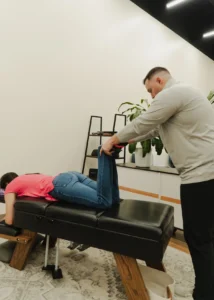
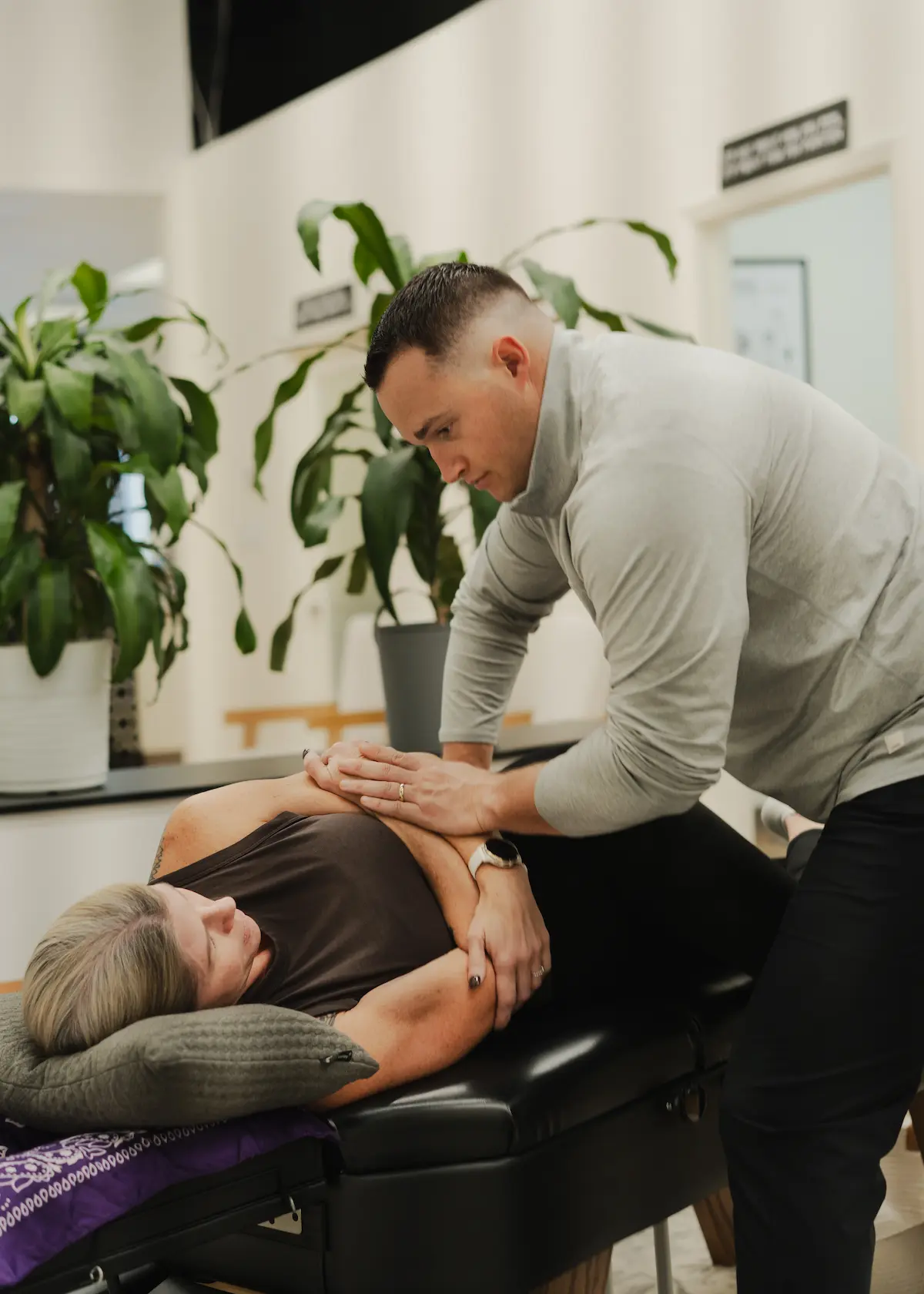
From there, chiropractic adjustments restore motion to the joints that have gotten stuck, which is a prerequisite for real alignment change. Soft tissue therapy releases the muscles that have been holding the poor posture in place. And mobility and flexibility training retrains your movement patterns so the correction sticks between visits instead of resetting each time you sit down. Our posture correction plans combine all four rather than relying on any single one.
How Long It Takes
This is the part people most want a straight answer on, so here it is: there is no instant version. Postural change follows the same rule as any physical change, which is that consistency over time is what produces lasting results.
Early on, many people notice reduced tension and better awareness of their positioning fairly quickly. Structural improvement that holds on its own takes longer, because your muscles and joints need repeated input to adopt the new pattern as the default. The patients who see the most change are the ones who stay consistent with both their care and the movement work between visits.
It is also worth knowing that maintaining good posture is an ongoing thing, not a box you check once. Modern life pulls everyone toward screens and chairs, so keeping the improvement usually means building a few sustainable habits into your week.
Signs Poor Posture Is Already Affecting You
Posture is easy to ignore until it starts causing symptoms, and by then the pattern has usually been building for a while. A few common signs suggest your posture is doing more than looking a certain way.
Persistent neck tension and stiffness often trace back to forward head posture. Recurring tension headaches can come from the same upper neck strain. Nagging lower back discomfort, especially after sitting, frequently connects to a flattened lumbar curve and a tilted pelvis. Over the long term, that kind of postural loading can also accelerate wear on the discs.
None of these are guaranteed to be posture-driven, but when they show up together in someone who spends long hours at a desk, posture is usually part of the story. That is why an objective assessment is more useful than guessing.
Habits That Support the Work Between Visits
Care in the office does the structural part, but what you do the rest of the week is what makes the change hold. The habits do not need to be complicated to matter.
Set your screen so the top of the monitor is roughly at eye level, which discourages the head from drifting forward. Take movement breaks every 30 to 60 minutes instead of staying frozen in one position for hours. Small resets throughout the day keep the muscles from locking into the old pattern.
These habits will not correct posture on their own, and it would be dishonest to suggest otherwise. But paired with an actual correction plan, they are what keeps you from sliding back to square one every time you sit down at your desk in Colleyville.
Ready to See What’s Actually Going On
If you have wondered whether it is too late to do anything about your posture, the answer is that it very likely is not. A digital posture analysis is a straightforward place to start, since it shows you exactly what is happening before anything is recommended. To book an assessment at our Colleyville office, reach out through our contact page or call 682-343-6801.